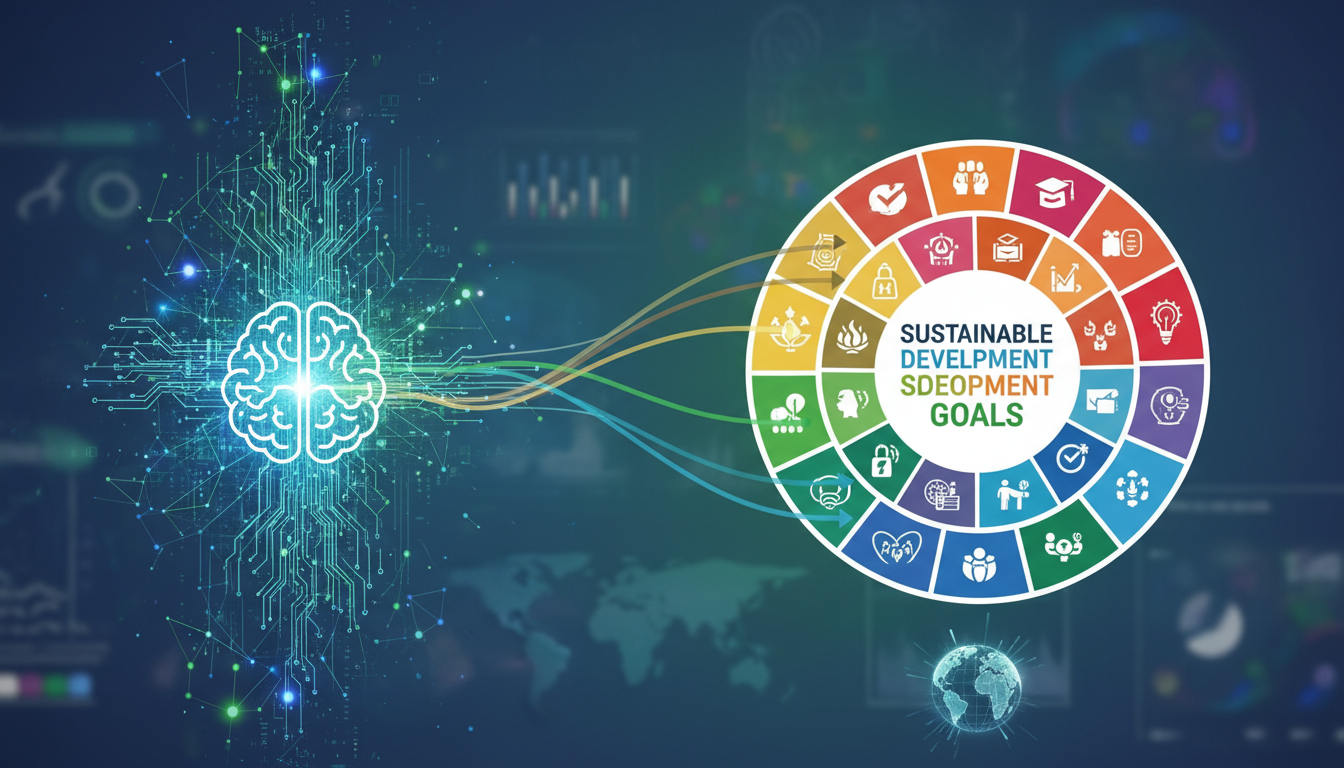
AI and sustainable goals are becoming deeply connected as technology takes on a larger role in solving global challenges. From reducing energy waste and improving healthcare access to supporting education and climate action, artificial intelligence offers powerful tools to accelerate progress in a responsible way. When guided by ethical principles and long term thinking, ai can help societies make smarter decisions, use resources more efficiently, and move closer to a more inclusive and sustainable future for everyone.
AI and sustainable goals. How AI Accelerates Progress Toward the United Nations Sustainable Development Goals
Estimated reading time: 7 minutes
- AI is a key enabler in achieving the United Nations Sustainable Development Goals (SDGs).
- It has the potential to impact 134 out of 169 SDG targets, driven by significant technological advancements.
- Core AI technologies include Computer Vision, NLP, Predictive Analytics, and Reinforcement Learning.
- The application of AI spans numerous SDGs, addressing challenges in health, education, and climate.
- Despite its advantages, AI deployment carries risks that necessitate ethical frameworks and equitable access.
Table of Contents
- Key AI Capabilities Driving SDG Progress
- AI Applications by Select SDGs
- Challenges and Risks
- Recommendations for Implementation
- Conclusion
AI and sustainable goals
As stated by the UN Department of Economic and Social Affairs, AI has the potential to enable 134 out of 169 SDG targets—approximately 79% of the goals set to combat global challenges (UN Global Compact). The rise of AI technologies has led to over 600 documented use cases in the social impact sector, marking a remarkable 300% increase since 2018 (Google Public Policy). Here are the primary AI capabilities that are driving this momentum:
1. Computer Vision
Computer vision technology interprets images and videos, facilitating various applications that support sustainable development. It is particularly effective in:
- Disease detection in crops: AI algorithms can identify plant diseases by analyzing images of crops, enabling timely intervention.
- Soil moisture analysis: Sensors coupled with computer vision help in assessing soil conditions, leading to more efficient water usage in agriculture.
- Emissions monitoring: Satellite imagery analyzed through computer vision allows for real-time tracking of emissions from various sources.
- Waste sorting: Automated systems leverage image recognition to improve recycling efforts by effectively sorting waste materials (Google Public Policy).
2. Natural Language Processing (NLP) and Generative AI
NLP and generative AI technologies are transforming educational frameworks and economic opportunities:
- Educational Coaching: AI tools offer instant feedback on writing and reading comprehension, catering to the unique learning needs of students (Google Public Policy).
- Chatbots for Economic Growth: Businesses are utilizing NLP to create chatbots that assist customers, automate tasks, and enhance productivity.
3. Predictive Analytics and Machine Learning
Machine learning models play a crucial role in forecasting and optimization, enabling businesses and governments to make data-driven decisions:
- Forecasting climate events: AI can analyze historical climate data to predict extreme weather conditions, which aids in disaster preparedness.
- Energy optimization: Machine learning algorithms optimize energy grid management and schedule maintenance for wind turbines, thus improving efficiency and operational effectiveness (UN Global Compact).
- Workplace safety: Machine learning models are developed to detect hazards in various work environments, reducing accidents and improving safety protocols.
4. Reinforcement Learning
Reinforcement learning, a subset of AI, focuses on how agents take actions to maximize their long-term rewards. This powerful approach is used in:
- Traffic flow optimization: AI systems enhance traffic management systems to reduce congestion and streamline city operations.
- Energy distribution: AI optimizes energy distribution techniques to ensure efficient use of resources and lower emissions, thus fostering sustainable practices (Google Public Policy).
AI Applications by Select SDGs
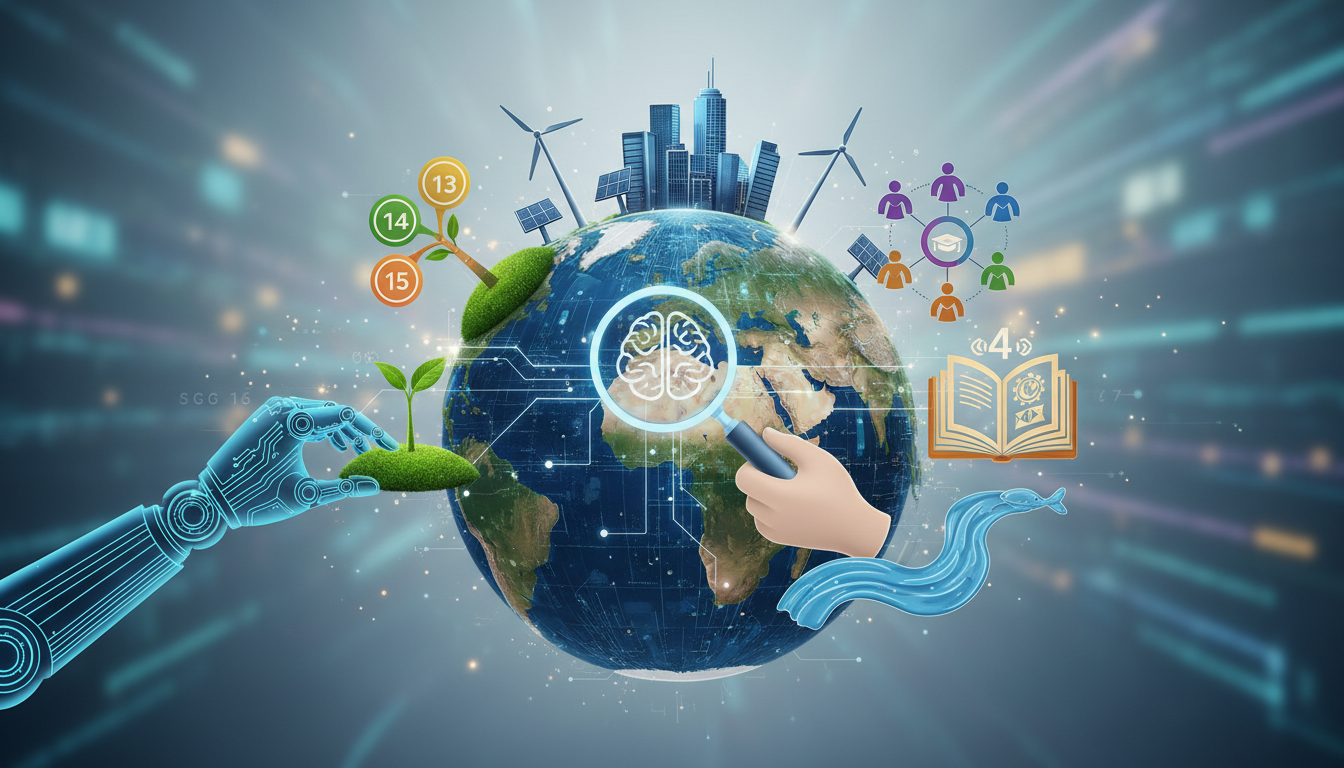
The impact of AI is profound across all SDGs, particularly in health, education, and climate action. Below is an overview of how AI contributes to specific SDGs:
| SDG | Description | Examples |
|---|---|---|
| SDG 3: Good Health and Well-Being | AI enhances healthcare delivery through improved diagnosis and public health initiatives. | Image recognition aids in disease detection; emotion detection in code-mixed dialogues facilitates better patient communication (AI for SDGs Academy). |
| SDG 4: Quality Education | AI supports personalized learning experiences, providing critical feedback in real-time. | NLP tools for reading and writing assessments enhance educational outcomes (Google Public Policy). |
| SDG 6: Clean Water and Sanitation | AI detects leaks and optimizes water treatment processes, improving resource management. | AI algorithms monitor piped networks to optimize water use (UN Global Compact). |
| SDG 8: Decent Work and Economic Growth | Utilizing AI to map job skills and automate repetitive tasks contributes to workplace efficiency. | Intelligent traffic management systems help reduce accident rates and improve urban mobility (Google Public Policy). |
| SDG 9: Industry, Innovation, Infrastructure | AI facilitates risk mitigation and the development of clean technologies. | Enhanced energy systems emerge from AI-driven solutions (IGI Global). |
| SDG 11: Sustainable Cities and Communities | AI optimizes urban infrastructure and traffic, contributing to sustainable urban developments. | AI’s role in urban planning is critical for achieving sustainable communities (Google Public Policy). |
| SDG 13: Climate Action | AI enhances forecasting, renewable energy management, and emissions monitoring. | AI-enabled initiatives like Climate TRACE track power plant emissions (Government of the Netherlands). |
Further applications include poverty reduction (SDG 1), zero hunger (SDG 2), and sustainable production and consumption (SDG 12), underscoring the versatility of AI in addressing various facets of sustainable development (SSRN).
AI and sustainable goals: Challenges and Risks
Despite the many advantages AI brings to the table, it is essential to recognize the potential risks associated with its deployment:
- Energy Consumption: AI models, particularly those requiring substantial computational power, contribute to carbon emissions if not managed wisely (UN Global Compact).
- Ethical Concerns: Issues related to data bias and ethical AI usage are pertinent. Stakeholders must be cautious and develop frameworks that uphold ethical standards in AI deployment (SSRN).
- Equitable Access: Barriers to access and disparity across regions, especially in developing countries, could exacerbate inequalities if AI solutions are not implemented with equity in mind (IGI Global).
- Environmental Effects: Evaluating the environmental impact of AI technologies is crucial to ensure they do not inadvertently harm SDG outcomes (AI for SDGs Academy).
Recommendations for Implementation
To maximize the benefits of AI in achieving SDGs, organizations must consider the following recommendations:
- Upskill Teams: Providing training in digital fluency and AI ethics is crucial for fostering understanding within teams and ensuring responsible AI use (UN Global Compact).
- Foster Collaboration: A collaborative ecosystem involving businesses, governments, AI developers, and researchers is vital in leveraging AI for social good (UN Global Compact).
- Adopt Governance: Transparency and accountability should be embedded in AI lifecycles. Adopting governance frameworks aligned with UN principles will foster responsible AI development (UNDP).
- Prioritize Equity: Policymakers should prioritize inclusivity in AI applications to ensure that underrepresented communities benefit Equitably from AI advancements (UN Global Compact).
Additionally, resources like the AI4SDGs Think Tank are invaluable for cataloging projects and assessing both positive and negative impacts across the SDGs (AI for SDGs Academy). The ongoing research underscores the transformative role AI can play when deployed responsibly and ethically in alignment with the SDGs.
Conclusion
AI is at the forefront of a revolution that will shape the future of humanity in ways we are just beginning to understand. As we navigate the complexities of integrating AI technologies with sustainable practices, it is crucial to establish frameworks that ensure both the positive effects are maximized and the risks are mitigated. Together, with thoughtful implementation and collaboration, we can leverage AI to address the world’s most pressing challenges—making significant strides toward achieving the Sustainable Development Goals.
FAQ
Q: What role does AI play in achieving SDGs?
A: AI facilitates data processing, forecasting, resource optimization, and targeted interventions to address critical global challenges and promote sustainable development.
Q: What are the main challenges of implementing AI for SDGs?
A: Major challenges include energy consumption, ethical concerns, equitable access, and potential environmental impacts.
Q: How can organizations ensure responsible AI use?
A: Organizations can upskill teams, foster collaboration, adopt governance frameworks, and prioritize equity in AI applications to maximize benefits and minimize risks.
Q: Where can I find more resources related to AI and SDGs?
A: The AI4SDGs Think Tank is a valuable resource for projects and assessments on AI’s impacts concerning the SDGs.