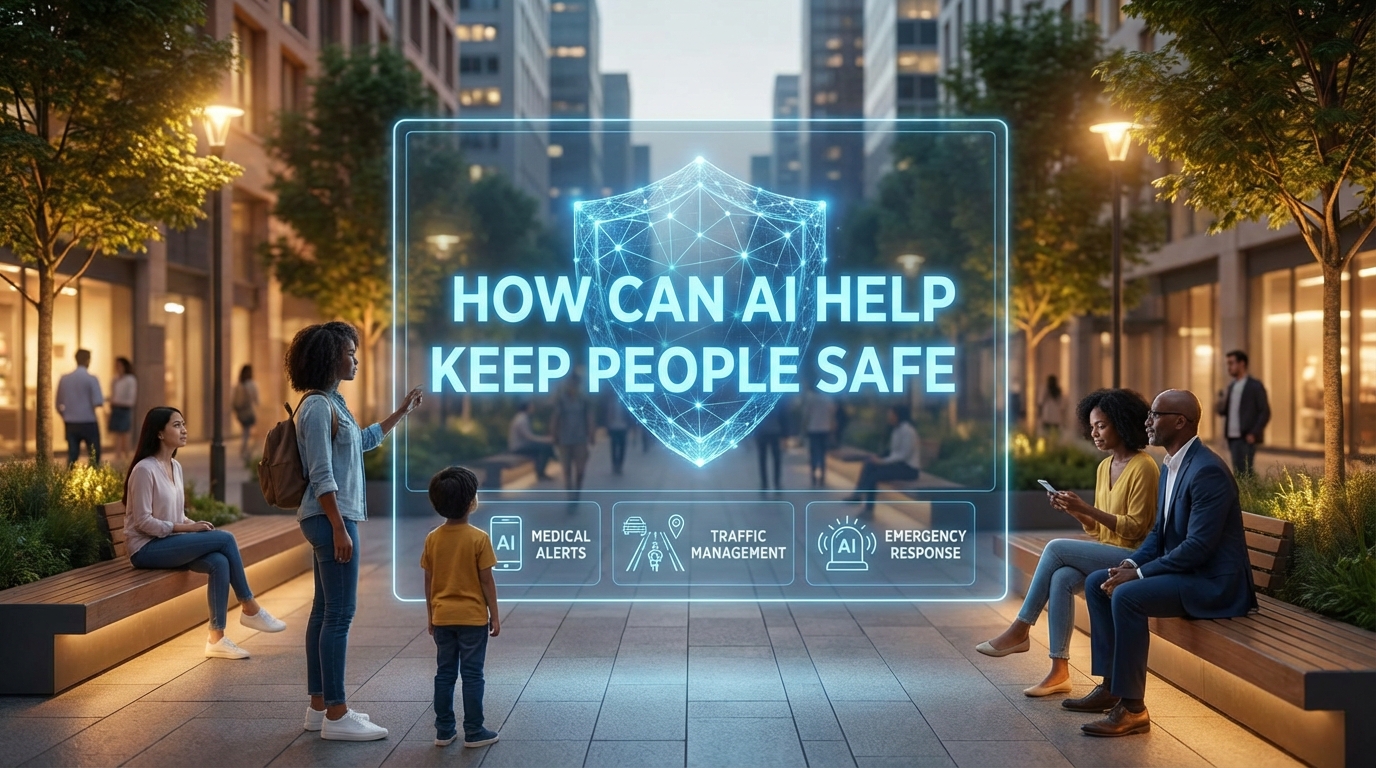
How Can AI Help Keep People Safe is no longer a futuristic question but a real world reality shaping our everyday lives. From detecting dangers before they happen to responding faster in emergencies artificial intelligence is transforming the way we protect people at home at work and in public spaces. What once relied solely on human reaction and limited data can now be supported by smart systems that analyze patterns predict risks and act in seconds. As AI continues to evolve it is becoming one of the most powerful tools we have for improving safety preventing harm and saving lives across the world.
How Can AI Help Keep People Safe?
Estimated reading time: 6 minutes
- Real-time hazard detection through advanced AI technologies
- Predictive analytics to preemptively identify risks
- Behavior monitoring for enhanced compliance and safety
- Automated inspections and innovative safety training methods
- Proven outcomes and practical steps for implementation
Table of Contents
- Real-Time Hazard Detection and Monitoring
- Predictive Analytics and Risk Assessment
- Behavior Monitoring and Compliance
- Automated Inspections and Safety Training
- Proven Outcomes and Broader Applications
- Practical Takeaways
- FAQ
Real-Time Hazard Detection and Monitoring and how can aI keep people safe
One of the most compelling ways How Can AI Help Keep People Safe is through real-time hazard detection and monitoring. Utilizing advanced technologies such as machine learning, computer vision, and an array of sensors, AI systems continuously scan environments to identify risks. For instance, in manufacturing, AI can monitor machine performance to forecast potential failures, preventing accidents on the factory floor (SafetyCulture). In the mining industry, autonomous vehicles are equipped to detect gas leaks or structural collapses, operating around the clock to mitigate risks (SafetyCulture).
Furthermore, chemical plants utilize AI-driven sensors for monitoring real-time air quality changes, ensuring that hazardous gases are detected promptly. In the energy sector, drones are deployed to inspect power lines, pipelines, and rigs, recognizing signs of corrosion or leaks without exposing human inspectors to danger (SafetyCulture). AI also enhances the effectiveness of CCTV systems through video analytics, such as identifying whether workers are wearing hard hats or if they enter restricted zones, automatically triggering corrective actions when necessary (Protex).
Predictive Analytics and Risk Assessment
Another vital function of AI is its ability to harness predictive analytics and risk assessment. AI systems analyze vast datasets generated by sensors, cameras, and historical reports to uncover patterns that enable organizations to forecast hazards before they manifest. This transition from reactive to proactive safety measures significantly lowers Total Recordable Incident Rates (TRIR), Lost Day Rates (LDR), and overall incident costs (Protex).
In the UK, the EASE program utilizes AI to assess the risks associated with substance exposure, identifying potential health threats before they lead to serious incidents (PMC). In logistics settings, AI systems compute Serious Injury and Fatality (SIF) risks by analyzing real-time data on object velocity, proximity, and force, which has proven instrumental for companies like Marks & Spencer in minimizing unsafe occurrences (Protex).
Behavior Monitoring and Compliance
AI technology also plays a crucial role in behavior monitoring and compliance. By deploying cameras and sensors to track worker actions, AI can identify unsafe behaviors, fatigue indicators, and violations of safety protocols in real-time. For example, in transportation, systems can detect reckless driving behavior, such as speeding or harsh braking, while in warehousing, AI ensures that equipment is handled safely and fire safety protocols are upheld (SafetyCulture).
AI-enabled smart personal protective equipment (PPE) can monitor workers’ vital signs and air quality levels, adapting to hazardous conditions as they arise. The integration of Internet of Things (IoT) devices allows organizations to track compliance and location efficiently, considerably aiding in audits and ensuring adherence to regulations (PMC).
Automated Inspections and Safety Training
Automated inspections represent another significant advancement introduced by AI. These systems can generate detailed checklists, utilizing drones or cameras for scrutinizing high-risk areas without human interference (SafetyCulture). Training programs are also evolving, with organizations increasingly adopting virtual reality (VR) simulations that offer immersive, risk-free environments for practice. These training models incorporate personalized quizzes and adaptive learning modules, ensuring that employees are equipped to handle emergencies or complex tasks without the danger of on-the-job training (SafetyCulture).
By automating inspection processes and enhancing training methodologies, organizations can boost compliance, reduce human error, and foster fair safety practices by mitigating biases inherent in algorithmic decision-making (USF Health).
Proven Outcomes and Broader Applications
The effective implementation of AI-driven safety measures yields compelling outcomes. Organizations observe fewer injuries, swift returns on investment (ROI), and a wealth of evidence-based insights from tagged events and automatic reporting systems (Protex). Various platforms, such as Intenseye and Protex AI, seamlessly integrate with existing CCTV infrastructure, facilitating a scalable approach to hazard detection and compliance monitoring (Protex, Intenseye).
Beyond industrial settings, the principles of AI safety extend to secure machine learning applications, such as Google’s SAIF framework, which focuses on data protection against threats like data poisoning (Google AI). However, it is imperative to acknowledge the existing limitations in the field, particularly concerning the need for ensuring algorithmic fairness and maintaining data quality for reliable predictive outcomes (USF Health).
Practical Takeaways on How can AI keep people safe
As organizations integrate AI into their safety protocols, several actionable insights can improve operational effectiveness and enhance safety:
- Invest in Real-Time Monitoring Systems: Implement AI systems that utilize cameras and sensors for continuous hazard detection, ensuring a proactive approach to safety management.
- Leverage Predictive Analytics: Use AI-driven analytics tools to identify patterns within safety data, thus enabling early warnings for potential hazards.
- Enhance Training Programs: Transition to virtual training environments that allow workers to simulate high-risk scenarios without real-world consequences.
- Adopt Behavior Monitoring Technologies: Embrace AI tools that monitor compliance to safety protocols in real-time, aiding in necessary behavioral corrections.
- Prioritize Data Quality: Focus on ensuring high-quality data inputs for AI systems to improve predictive reliability and outcomes.
In conclusion, the potential for AI in enhancing safety is immense. As organizations adopt these technologies, they not only protect their workers and assets but also pave the way for a future where advanced technology and human expertise collaborate to uphold the highest safety standards. The opportunity is ripe for those willing to leverage AI in their safety strategies—making workplaces safer for everyone.
FAQ
Q: How does AI detect hazards in real-time?
A: AI systems utilize machine learning, computer vision, and sensors to continuously scan environments for risks, allowing for immediate action to be taken.
Q: Can AI improve workplace safety training?
A: Yes, AI enables the use of virtual reality simulations for immersive training, helping employees practice in a risk-free environment.
Q: What industries benefit most from AI safety technologies?
A: Industries such as manufacturing, mining, transportation, and chemical processing notably benefit from AI-driven safety solutions.
Q: How can companies ensure the effectiveness of their AI safety measures?
A: By continuously monitoring data quality and patterns, companies can adjust their AI systems for better predictive outcomes.